Food guide
What Are Ultra-Processed Foods? Examples and How to Spot Them
Short answer
Ultra-processed foods are industrial products made mostly from ingredients you would not find in a home kitchen: protein isolates, high-fructose corn syrup, hydrogenated oils, and additives such as flavors, colors, emulsifiers and sweeteners. That is the definition used in nutrition research, from the NOVA scale (Monteiro et al., 2019). The quick test is the ingredient list: one of those ingredients is enough to make a food ultra-processed (NOVA 4). They are not a rare treat in the US. Ultra-processed foods made up 55% of the calories people ate in 2021 to 2023, by the CDC's count. Sodas, packaged snacks, candy, ice cream, most breakfast cereals, packaged breads and most protein bars are typical examples.
What counts as ultra-processed food?
Almost every food in a store is processed in some way, so "processed" alone does not tell you much. NOVA, the scale researchers use, sorts foods into four groups by how they are made, not by their nutrients.
- Group 1, unprocessed or minimally processed. whole foods that have only been dried, crushed, ground, roasted, boiled or pasteurized, with nothing added. Fruit, vegetables, eggs, plain milk, oats, plain meat and fish.
- Group 2, processed culinary ingredients. oils, butter, sugar and salt. You cook with them; you do not eat them on their own.
- Group 3, processed foods. group 1 foods with salt, sugar or oil added. Canned vegetables, cheese, simple bread made from flour, water, salt and yeast, salted nuts.
- Group 4, ultra-processed foods. formulations made mostly from substances of industrial use, often with cosmetic additives that make the food look, taste or feel a certain way.
There is no legal definition in the US yet. In July 2025 the FDA and USDA asked the public for data to help write a uniform federal definition, and noted that there is no single, universally accepted one. NOVA is the definition most research uses, and the one this guide follows.
How to tell if a food is ultra-processed
Turn the pack over and read the ingredients, not the front. According to the NOVA researchers, a product is ultra-processed if its ingredient list contains at least one item typical of group 4. Their own example: a bread with emulsifiers or colors is ultra-processed, a bread made only from flour, water, salt and yeast is not.
- Ingredients you would not cook with. high-fructose corn syrup, hydrogenated or interesterified oils, hydrolyzed proteins, soy protein isolate, gluten, casein and whey protein.
- Cosmetic additives. flavors (including "natural flavors"), flavor enhancers, colors, emulsifiers such as lecithin, emulsifying salts, sweeteners, thickeners, and gelling or glazing agents.
- What does not count on its own. salt, sugar, oil, vitamins added for fortification, and a long list of whole foods. A short list of foods you know is usually NOVA 3 at most.
The test is about how a food is made, not whether it is healthy. A low-sugar, high-protein food can be ultra-processed, and a sugary one can be only processed. That is why Truvi looks at processing and nutrition separately.
Ultra-processed foods examples (and look-alikes that are not)
The NOVA paper lists sodas, sweet or savory packaged snacks, chocolate and candy, ice cream, breakfast cereals, packaged breads and buns, and reconstituted meat products among typical ultra-processed foods. In the CDC data, the biggest sources of ultra-processed calories in the US were sandwiches including burgers, sweet bakery products, savory snacks and sweetened drinks.
Brand matters more than category. These are products we have scored. The first four are not ultra-processed:
-
97Excellent
-

67Good
-

60Good
-

44Fair
- Fairlife 2% ultra-filtered milk, NOVA 1 on our method, 97 out of 100. filtered milk, the lactase enzyme and vitamins A and D. "Ultra-filtered" sounds like ultra-processed, but filtering only splits the milk into its parts.
- Triscuit Hint of Salt, NOVA 3, 67 out of 100. three ingredients, whole grain wheat, canola oil and sea salt.
- Original Cheerios, NOVA 3, 60 out of 100. whole grain oats, corn starch, sugar, salt and added vitamins and minerals, with no flavors, colors, sweeteners or emulsifiers. So not every breakfast cereal is ultra-processed, though most flavored ones are.
- Larabar Peanut Butter Cookie, NOVA 3, 44 out of 100. dates and peanuts with a little salt. Not ultra-processed, but 16 g of sugar from the dates per bar, which is why its score is middling.
And these four are ultra-processed (NOVA 4):
-

61Good
-

58Good
-

33Fair
-

20Bad
- IQ Bar Chocolate Sea Salt, 61 out of 100. almonds come first, but the label also has pea protein crisps, natural flavors and stevia.
- Kirkland Signature Cookies & Cream protein bar, 58 out of 100. milk and whey protein isolates, erythritol, natural flavors, stevia and sunflower lecithin.
- Clif Bar Chocolate Chip, 33 out of 100. organic oats come first, but soy protein isolate and natural flavors make it NOVA 4. It also has 17 g of sugar per bar.
- Quest Hero Cookies & Cream, 20 out of 100. protein isolates, three sweeteners, palm kernel oil, lecithin and carrageenan.
Notice that the IQ Bar, which is ultra-processed, scores higher than the Larabar, which is not. Processing is one part of the picture. A food can be made simply and still be high in sugar or saturated fat.
Why are ultra-processed foods bad for you?
Most of the evidence comes from observational studies, which follow what people eat and what happens to them over years. A 2024 umbrella review in the BMJ pulled together 45 meta-analyses covering about 9.9 million people. Higher intake of ultra-processed food was linked to many worse outcomes, and the evidence was rated convincing for deaths from cardiovascular disease, type 2 diabetes, anxiety and common mental disorders (Lane et al., 2024). Observational studies show links, not proof of cause, and the review rated most of the evidence as low or very low quality.
One small controlled trial tested the effect directly. At the NIH Clinical Center, 20 adults ate an ultra-processed diet for 2 weeks and an unprocessed diet for 2 weeks, with meals matched for calories, sugar, salt, fat and fiber on the plate, and could eat as much as they wanted. On the ultra-processed diet they ate about 508 more calories a day and gained about 0.9 kg; on the unprocessed diet they lost about 0.9 kg (Hall et al., 2019). That is one short study in 20 people, but it points to a simple mechanism: these foods are easy to eat a lot of, quickly.
How to eat fewer ultra-processed foods without a new diet
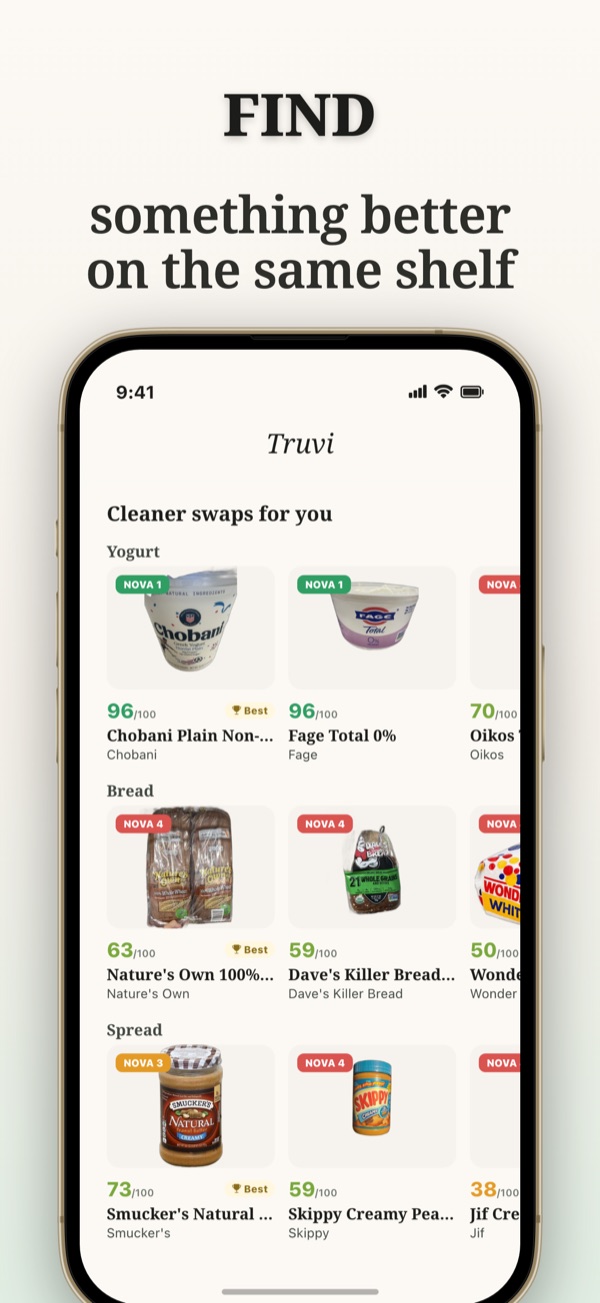
- Swap within the same shelf. crackers, cereal and bars all come in NOVA 3 versions. Plain Triscuits and Original Cheerios are examples from the same aisles as their ultra-processed neighbors.
- Watch the flavored version. the plain product is often processed and the flavored one ultra-processed, because flavors and colors are what get added.
- Start with the biggest sources. sandwiches and burgers, sweet bakery products, savory snacks and sweetened drinks are where most ultra-processed calories come from in the US.
- Do not judge by the front of the pack. "organic", "high protein", "low sugar" and "natural" say nothing about processing. The Clif Bar is mostly organic and still NOVA 4.
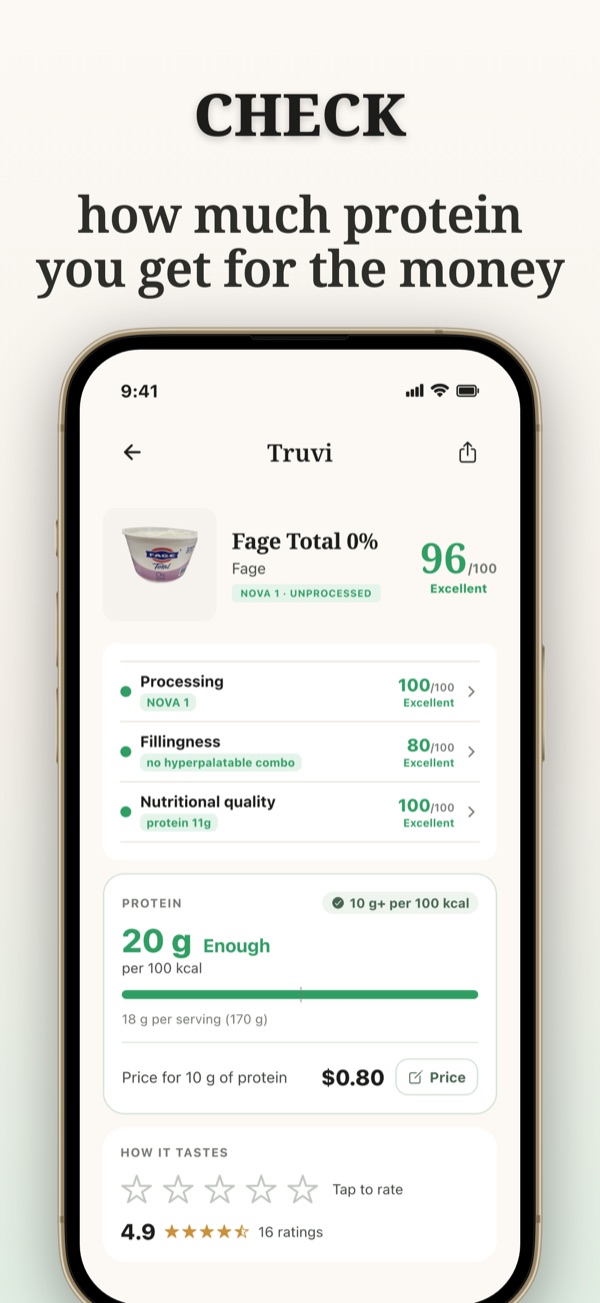
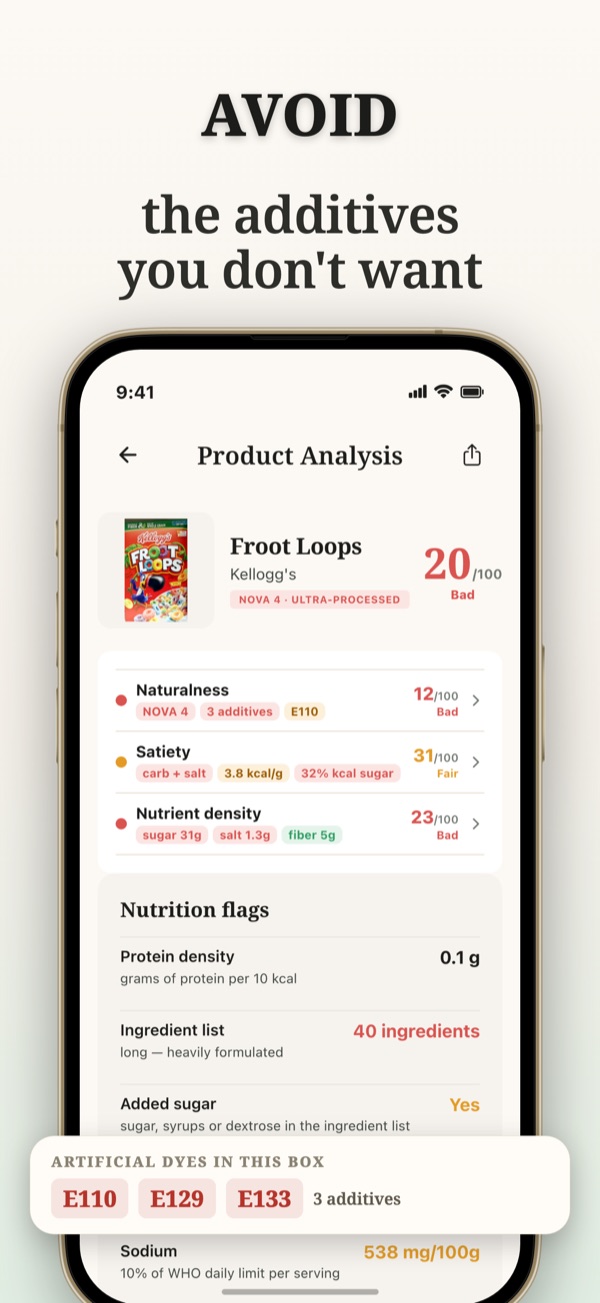
Truvi does the label check for you: scan a barcode and it shows the NOVA group, the ingredients that put the food there, and a better-scoring option from the same shelf. The Truvi score (our method) is an opinion from the label that blends processing, nutritional quality and how easy the food is to overeat.
Questions people ask
What are ultra-processed foods?
Industrial products made mostly from ingredients you would not cook with at home, such as protein isolates, high-fructose corn syrup and hydrogenated oils, usually with additives like flavors, colors, emulsifiers or sweeteners. In the NOVA scale used in research they are group 4.
What is the difference between processed and ultra-processed food?
Processed food (NOVA 3) is a whole food with salt, sugar or oil added, like cheese, canned beans or bread made from flour, water, salt and yeast. Ultra-processed food (NOVA 4) contains at least one industrial ingredient or cosmetic additive, like a bread with emulsifiers or colors.
What are examples of ultra-processed foods?
Sodas, chips and other packaged snacks, candy, ice cream, most breakfast cereals, packaged breads and buns, reconstituted meat products, and most protein bars. Check the label, though: Original Cheerios and plain Triscuits are only processed (NOVA 3).
Is milk ultra-processed?
Plain milk is not. Pasteurized milk is minimally processed (NOVA 1). Even Fairlife ultra-filtered milk is NOVA 1 on our method, because filtering only separates the milk. Flavored milks with sweeteners, flavors or thickeners are ultra-processed.
Is cereal ultra-processed?
Most breakfast cereals are, because they contain flavors, colors or emulsifiers. Not all: Original Cheerios lists oats, corn starch, sugar, salt and added vitamins and minerals, which makes it processed (NOVA 3), not ultra-processed.
Is bread ultra-processed?
It depends on the label. Bread made only from flour, water, salt and yeast is processed (NOVA 3). Most packaged sliced bread adds emulsifiers or other additives, which makes it ultra-processed.
Why are ultra-processed foods bad for you?
In observational research, diets high in ultra-processed food are linked to higher risks of heart disease deaths, type 2 diabetes and mental health problems. A small NIH trial found people ate about 508 more calories a day on an ultra-processed diet when they could eat as much as they liked.
Sources
- Monteiro CA et al. Ultra-processed foods: what they are and how to identify them. Public Health Nutrition, 2019.
- CDC National Center for Health Statistics. Ultra-processed food consumption in youth and adults: United States, August 2021 to August 2023. NCHS Data Brief No. 536, 2025.
- FDA and USDA. Ultra-Processed Foods; Request for Information. Federal Register, July 25, 2025.
- Lane MM et al. Ultra-processed food exposure and adverse health outcomes: umbrella review of epidemiological meta-analyses. BMJ, 2024.
- Hall KD et al. Ultra-processed diets cause excess calorie intake and weight gain: an inpatient randomized controlled trial of ad libitum food intake. Cell Metabolism, 2019.
Product scores are the Truvi score (our method, from the label). How the score works. Not medical advice.
Spotted a mistake? Email [email protected] and we will review it.
Check any product before you buy it
Point your phone at a barcode in the store. Truvi shows the score, what's inside and a better option on the same shelf.
Download on theApp Store